Gambella Wetland: Restored, Handed Back to the Community
The Gambella Wetland in Meru County has been officially handed back to the community that depends on it - restored, replanted, and protected. In August 2025, CETRAD and the Wyss Academy for Nature completed three years of restoration work and transferred stewardship of the wetland to local leaders, marking a milestone that few restoration projects in Kenya's drylands have reached.
The results are visible. Over 6,000 native trees now form a dense thicket across the wetland's riparian zone, planted in three phases between November 2023 and May 2024. What had been open, degraded land is now a green buffer that keeps livestock and people out of the wetland's core. Two springs that had dried up completely have re-emerged. The wetland is recovering.
The key insight behind the project: ecological restoration only holds when communities have an alternative. As long as the wetland was the only water source within reach, people and livestock would keep entering it regardless of rules or fencing. CETRAD's response was to build that alternative directly: a 20-metre shallow well, a 100-cubic-metre solar-powered elevated tank, and three water kiosks serving households and livestock within a 1.4 km radius. With reliable water accessible outside the wetland, direct encroachment dropped sharply.
"Saving the Gambella wetland is not just about protecting water and wildlife - it's about securing our future, our culture, and our children's breath of life. If we lose it, we lose a legacy." - Joseph Ombega, CETRAD
The tree planting drew directly on the knowledge of community elders, who were consulted about which native species once grew in the area. That knowledge shaped species selection across all three planting phases. NEMA, WRA, and local Water Resource Users Associations (WRUAs) were involved throughout, ensuring the project was anchored in governance structures that will outlast any single intervention.
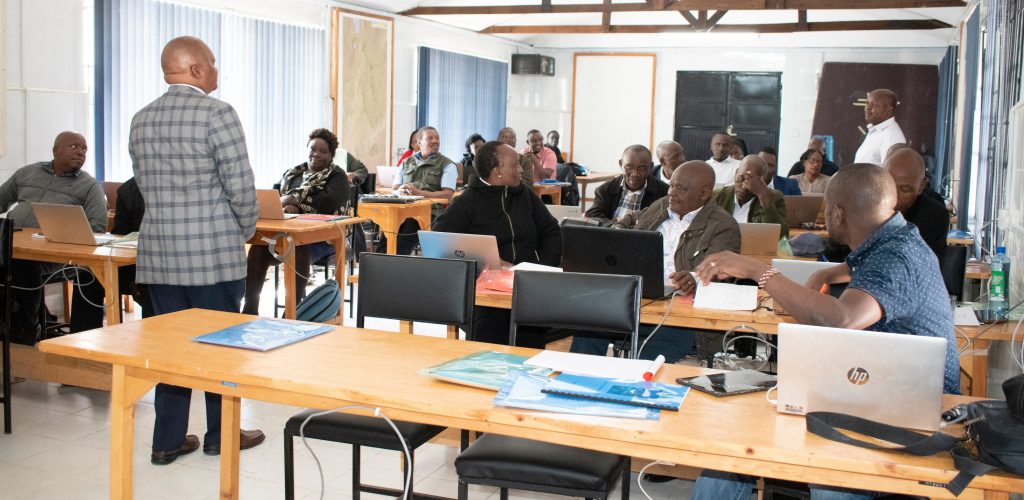
At the handover, CETRAD convened a Coalition for Change workshop - a structured dialogue bringing together community members, riparian landowners, government officials, and conservation partners to agree on how the wetland will be managed going forward. The coalition's core principle: the infrastructure and the ecosystem both belong to the community, and lasting protection depends on shared ownership, not external enforcement.
"Creating a robust water infrastructure system is essential not only for providing vital resources beyond wetlands but also for fostering the restoration of these delicate ecosystems." - Micheal Musau
The Gambella model - community water infrastructure as the enabling condition for wetland restoration - is directly applicable to other degraded riparian sites across Laikipia and the broader Ewaso Ng'iro basin. CETRAD continues to document lessons from this project for replication in similar contexts.