Protecting Kenya's Water Towers Through Regenerative Farming
Kenya's Central Highlands - the zone running through Mt Kenya and the Aberdares - produces a large share of the country's food and feeds the rivers that supply Nairobi, Isiolo, and communities far downstream. What happens on those farms matters far beyond the farm gate. The Central Highlands Ecoregion Foodscapes (CHEF) programme, co-led by CETRAD and The Nature Conservancy, is working with communities here to make farming both more productive and less damaging to the water systems the region depends on.
CETRAD's role in CHEF focuses on rangelands and water governance. Rangelands cover a large portion of the landscape and are the foundation of livestock-based livelihoods. CETRAD works with communities on planned rotational grazing and pasture management - practices that let grass recover between grazing cycles, rebuilding the ground cover that holds water and prevents erosion. Alongside this, CETRAD trains Water Resource Users Associations (WRUAs): local groups responsible for managing water catchments at the community level. Strengthened WRUAs mean that better water management practices stay in place after the project ends.
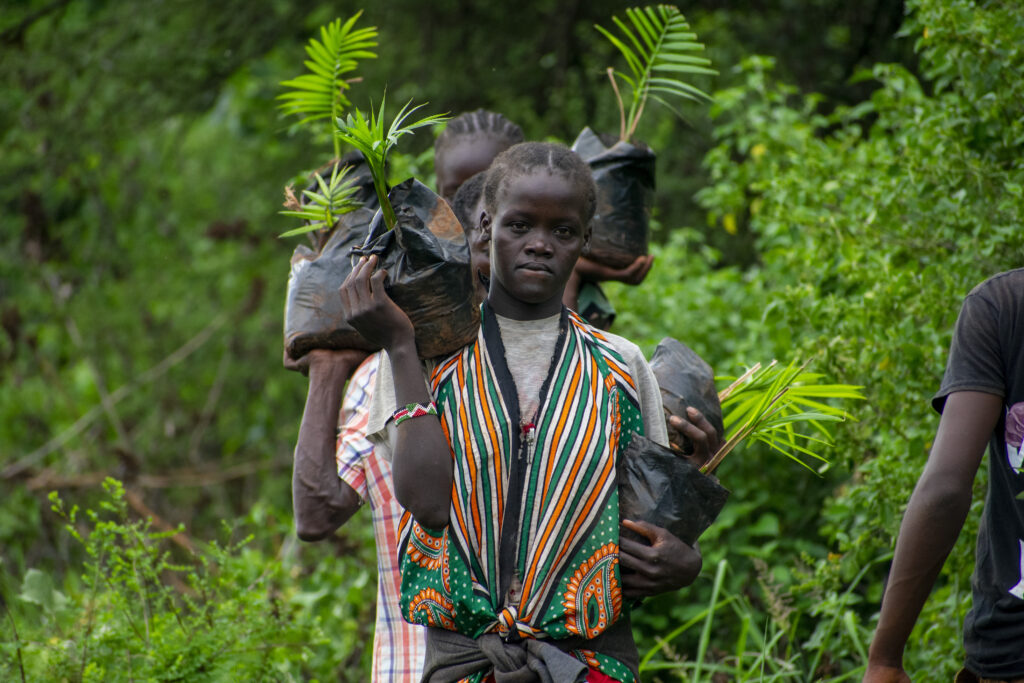
The broader CHEF programme encourages farmers to shift toward regenerative practices: agroforestry (trees alongside crops), better soil management, and reduced dependence on inputs that degrade land over time. Water efficiency is a particular focus - end-user metering and smarter irrigation help farms produce more with less, which matters in a region where water is both plentiful by Kenya standards and under increasing pressure.
A practical innovation within CHEF is the Foodscape Innovation Hub, which brings together farmers, researchers, and local organizations to test new approaches and scale what works. Fodder hubs within this structure help communities produce and distribute livestock feed more efficiently - reducing the pressure on open rangelands while improving livestock nutrition and productivity.
The CHEF project reflects an understanding that the Central Highlands cannot be managed as farmland alone. These landscapes are water towers, carbon stores, and biodiversity corridors. Supporting communities to farm in ways that protect these functions is not an add-on to development - it is the development.