Turning Trees into Livelihoods: Gums and Resins in Ngare Mara
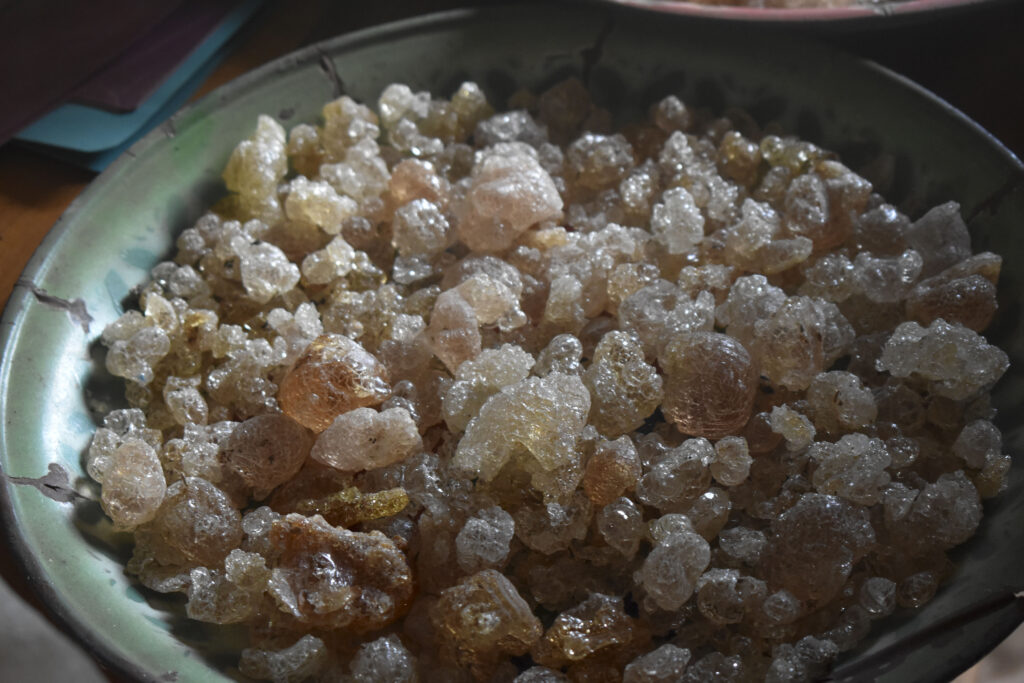
In Isiolo and Samburu Counties, more than 90 community members now earn up to half their household income from trees they once cut down for charcoal. The shift - from destructive extraction to sustainable harvesting - is the result of a joint initiative between CETRAD and the Wyss Academy for Nature that has been quietly changing how the Ngare Mara dryland communities relate to their landscape.
The trees at the centre of this work are not new to the region. Senegalia senegal (gum arabic), Commiphora myrrha (myrrh), and Boswellia neglecta (frankincense) have grown in these drylands for generations. Their gums and resins are traded in global markets - used in food products, cosmetics, and pharmaceuticals - but for years the communities living alongside these trees saw little of that value. Charcoal offered faster, more familiar income, even as it degraded the very land people depended on.
The project tackles that disconnect directly. Trained community members learn sustainable tapping techniques that harvest resin without damaging the tree, along with post-harvest handling and market linkage skills. Women and youth are central to the training cohort. Self-Help Groups and Community-Based Organizations now pool resources to access larger markets and negotiate better prices - the kind of collective leverage that individual sellers cannot achieve.
The income impact is significant enough to function as a dry-season safety net. For herders whose pasture thins out between rains, gum and resin income covers school fees, food, and livestock needs during the months when livestock values fall. The trees remain standing, growing more productive each year - a compounding asset where charcoal production is a one-time extraction.
Challenges remain. Insecurity affects access to some areas, and pests have reduced yields on certain trees. The project is expanding its geographic reach, mapping additional production areas and training more communities. The goal is to make gum and resin harvesting a reliable pillar of dryland livelihoods across this part of northern Kenya - one that simultaneously protects the tree cover the ecosystem needs.